
Do Solar Panels Need Cleaning? UK Maintenance Guide
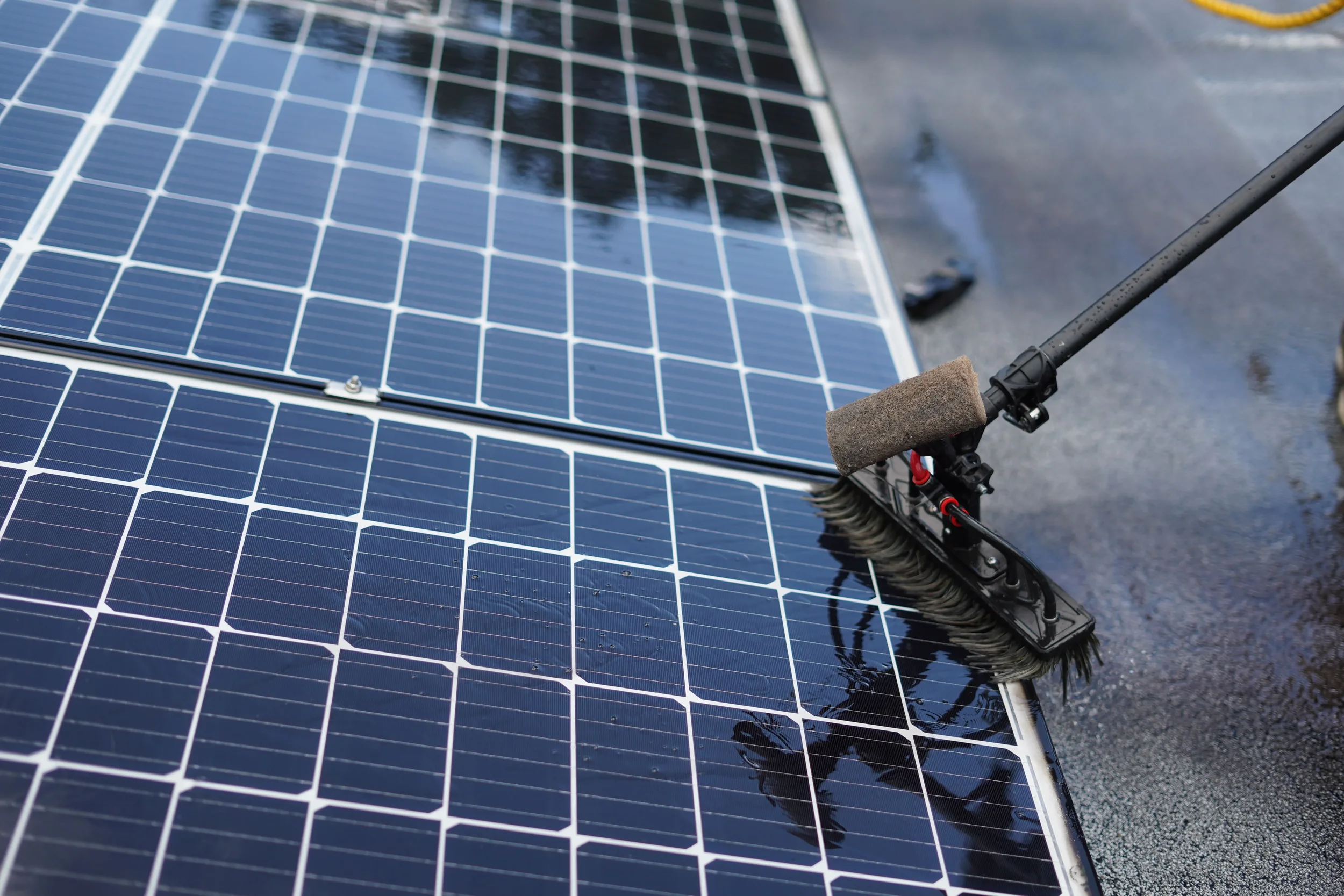
Do solar panels need cleaning? It’s one of the most common questions we hear from homeowners, and the answer is yes, but probably less often than you think.
If you are asking yourself should I clean my solar panels, you are already ahead of most. The truth is that solar panels are low-maintenance by design, but low-maintenance is not the same as no-maintenance. Rain handles most of the day-to-day surface dirt. The problem is that it does not handle all of it, and the gap between "most" and "all" is where your system quietly loses output.
Having designed and installed over 82,500+ panels across Yorkshire and the North of England, we have seen first-hand what a bit of neglect does to a system over time. This guide gives you a clear, practical answer on solar panel aftercare: whether your panels need cleaning, how often, how to do it safely, and what to avoid.
⚡ Not sure how well your panels are performing right now?
Our team can advise as part of your ongoing aftercare support. Get in touch with the P4 team.
Quick Navigation
Do Solar Panels Need Maintenance?
The short answer is a light regime of monitoring and occasional cleaning is all most UK homeowners ever need. Panels have no moving parts, no consumables, and for most of the year the British weather does a reasonable job of rinsing the surface. But soiling builds up over time, and certain types of dirt have a disproportionate impact on output.
The impact of dirty panels is easy to underestimate because it builds up gradually. A system generating 4,000 kWh per year that loses even a modest amount of output to soiling over a full year represents a real reduction in savings and, if you are on the Smart Export Guarantee, export earnings too.
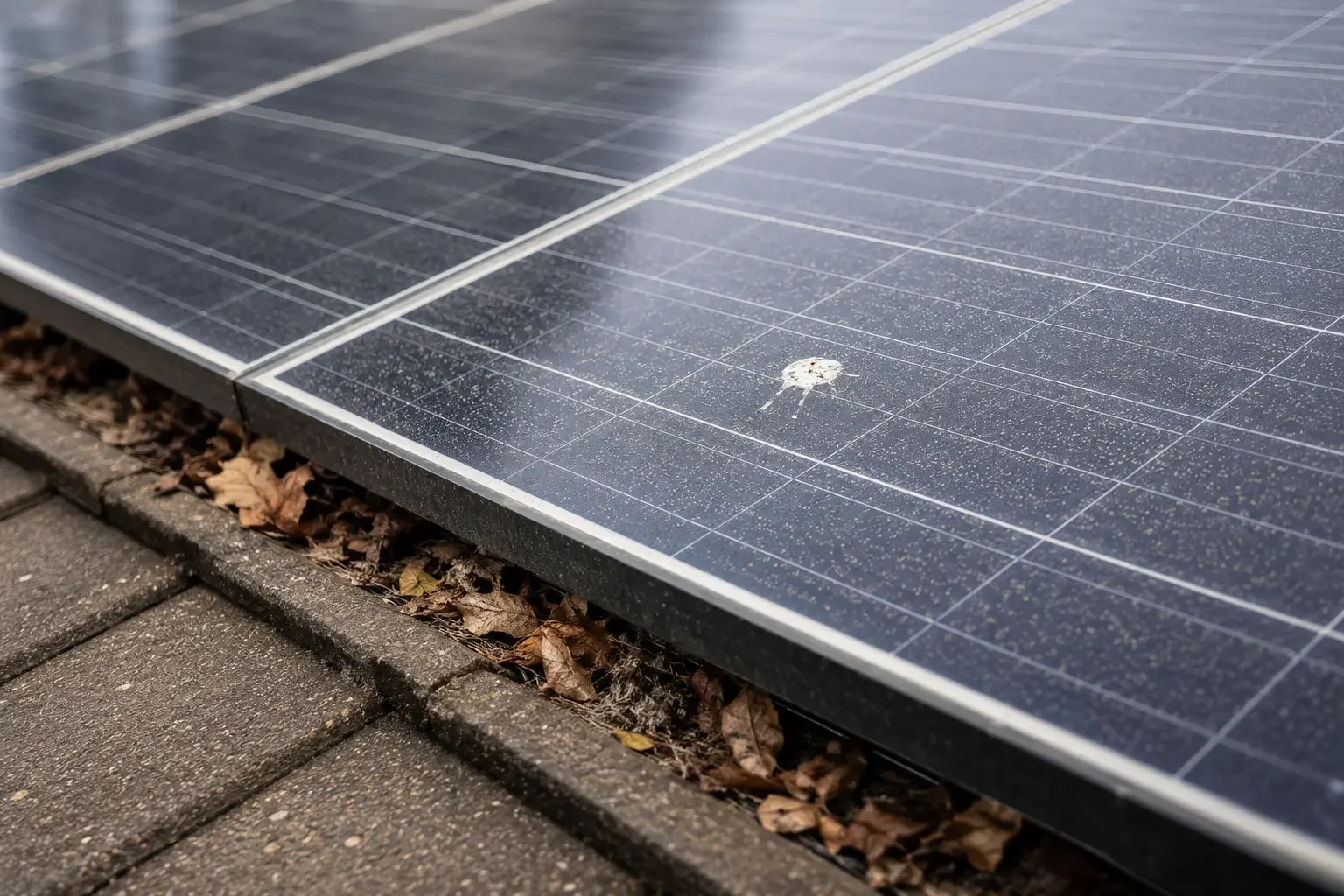
The most common culprit is bird droppings. Unlike dust, which spreads evenly and can often be rinsed by rainfall, a bird dropping concentrates shade on a small area of the panel. This creates what is known as a hot spot, where a shaded cell heats up while the surrounding cells continue to push current through it. Left in place for weeks or months, hot spots can cause permanent cell degradation that no amount of cleaning will reverse.
For most homes, caring for solar panels doesn’t need to be complicated. Cleaning once every one to two years is sufficient for the majority of pitched roof installs. The sections below help you work out whether your situation calls for more.
Does Rain Clean Solar Panels for You?
Partly yes. Entirely, no.
This is one of the most common pieces of advice passed around among solar owners, and it contains just enough truth to be misleading. Rain does help. On a well-pitched roof, a decent downpour will rinse away loose dust, light debris, and pollen. But rain has limits, and in the UK those limits matter.
What rain can remove:
Loose dust and fine particles
Light pollen deposits
General airborne grime that has not bonded to the surface
What rain cannot reliably remove:
Bird droppings (they bond to the surface and harden)
Moss and lichen (which grip the panel frame and edges)
Industrial or traffic pollution film (common in Bradford, Sheffield, and Leeds)
Agricultural dust and crop residue (relevant for installs near Harrogate, Skipton, and Ripon)
Tree sap
Salt film near coastal areas
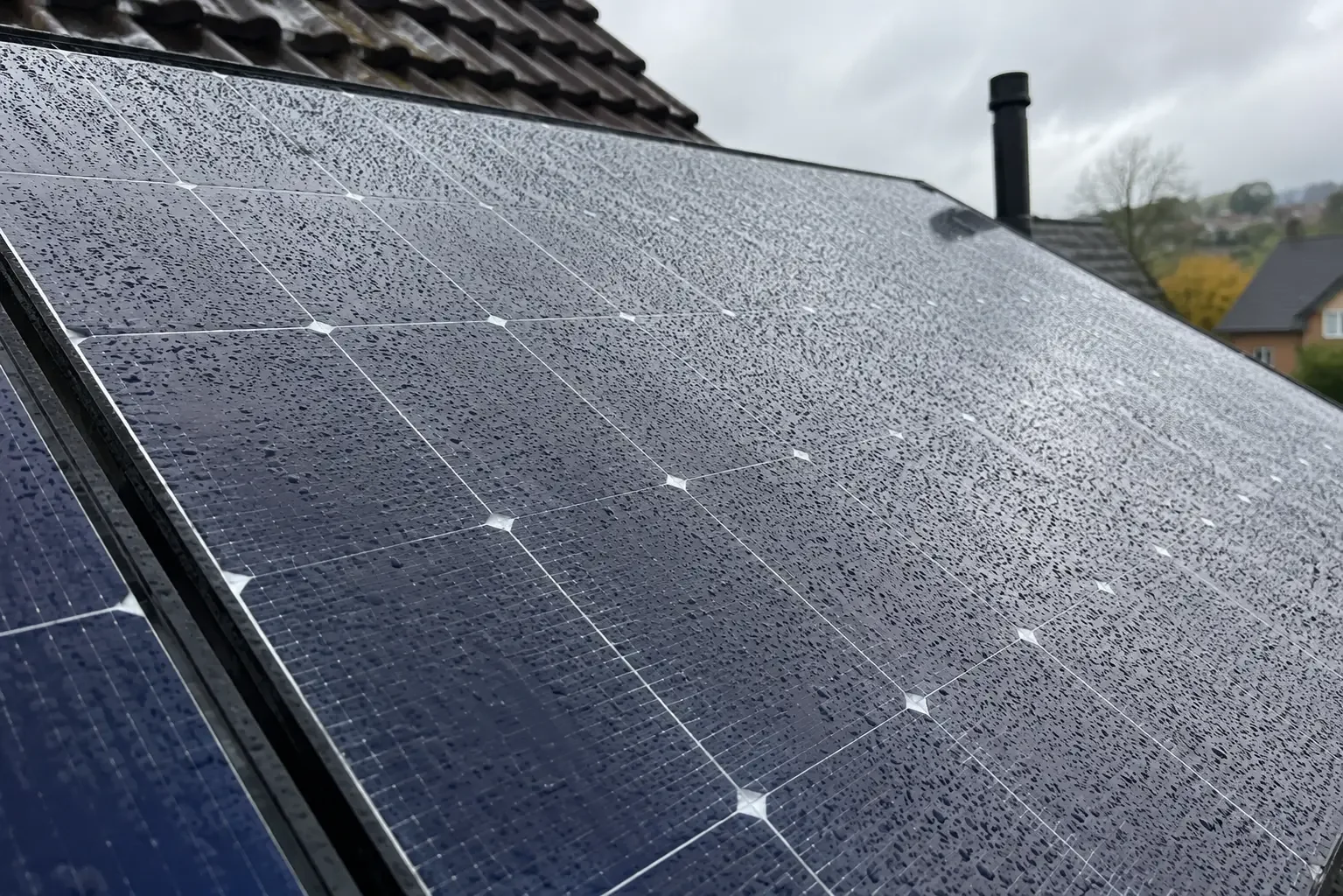
There is also the smeary film problem. Light UK drizzle, the kind we get most of the year, often moves surface dirt around rather than washing it away cleanly. The result is a thin, hazy film across the panel that reduces light transmission without looking obviously dirty from the ground.
Most modern panels have a hydrophobic coating, a water-repelling surface treatment that helps rain slide dirt off the glass. This works well for loose particles on a well-pitched roof. It does not work on bonded soiling like droppings or moss, and it becomes less effective as the coating ages.
How Often Do Solar Panels Need to Be Cleaned in the UK?
The honest answer is: it depends on your roof, your location, and what is landing on your panels.
How often to clean solar panels is not a fixed number. For most UK homes on a pitched roof with an angle between 25 and 45 degrees, cleaning every 12 to 24 months is a reasonable baseline. Below that pitch, frequency goes up.
| Property Type | Typical Cleaning Frequency |
|---|---|
| Pitched roof, average UK rainfall | Every 12 to 24 months |
| Near trees, farmland, or agricultural land | Every 6 to 12 months |
| Coastal location or near busy roads | Every 6 months |
| Low-pitch roof (under 15 degrees) | Every 6 to 12 months |
| Ground-mounted system | Every 6 to 12 months |
| Commercial flat roof | Quarterly |
These are guidelines, not rules. The right signal for when to clean is your system's actual output data, not the calendar.
When is the best time of year to clean solar panels in the UK?
Solar panel owners often ask whether solar panels are self-cleaning in winter and need attention only in summer. The reality is more nuanced.
UK winters do bring more frequent rainfall, which rinses loose dust from panel surfaces more regularly than a prolonged dry summer spell. During a dry period in May or June, dust and pollen can accumulate for weeks without a proper rinse. In that sense, winter rainfall does help passively.
But winter is not a maintenance-free season. It brings more organic debris (falling leaves, moss spores), road grime splashback from heavy rain hitting dirty surfaces, and in coastal or high-traffic areas, salt and particulate residue. Rainfall rinses some things off while depositing others.
The practical upshot for solar panel aftercare across the UK:
Late winter or early spring (February to March) is the best time for a full clean. Your panels go into the peak generation months (April to August) in the best possible condition.
Early autumn (September) is a sensible second clean if your panels are near trees or in a high-soiling environment.
For most homes, one clean per year in late winter is the right call.
What Affects How Quickly Your Solar Panels Get Dirty?
Two installs with identical panel counts can have very different solar panel maintenance needs depending on where they are and what surrounds them.
Roof pitch and angle
Steeper roofs shed water and debris more effectively. A 40-degree pitch in a normal rainfall area largely self-cleans for loose dust. A shallow pitch of 10 to 15 degrees holds water, allows debris to settle, and requires more frequent attention.
Bird activity and pigeon fouling
This is the single most common issue our installation team sees. Urban areas with high rooftop bird traffic, including Keighley, Bradford, Halifax, and Wakefield, are particularly affected. Pigeons will nest under raised roof-mounted panels if given the opportunity, creating an ongoing fouling problem that surface cleaning alone will not solve.
The long-term fix is bird mesh or bird proofing, a metal mesh system fitted around the panel frame to block the gap underneath. If pigeon fouling is a recurring problem, it is a far better investment than repeated cleaning costs.
Proximity to trees
Trees bring leaf debris in autumn, sap deposits year-round, and roosting birds. If your panels sit beneath or adjacent to overhanging branches, expect to clean more frequently and check for debris at frame edges after autumn.
Agricultural land nearby
Crop dust, soil particles, and agricultural residue are a real issue for installs in rural areas. Properties near farmland should factor this into their cleaning schedule.
Industrial and traffic pollution
Urban installs are exposed to particulate pollution that settles as a thin film. It does not wash off in light rain and is not visible from the ground, but it does affect output.
Coastal and road proximity
Salt film from coastal air and road spray from winter gritting both leave deposits that standard rainfall will not shift. Demineralised water is particularly useful for these installs.
Chimneys and extractor vents
Soot, grease, and airborne residue from nearby flues and kitchen extractors can coat panels directly above or downwind of them.
Spring pollen (April to May)
Pollen season is a significant but often overlooked soiling factor. A heavy pollen week in April can noticeably reduce output. This is one of the strongest reasons a late winter clean, timed just before pollen season, is so effective.
How to Tell When Your Solar Panels Need Cleaning
Rather than cleaning on a fixed schedule regardless of whether your panels need it, the smarter approach is to let your system data tell you.
Visual inspection from the ground
Start here. Look up at your panels from ground level and check for:
A dull or hazy appearance across the panel surface
Visible bird droppings or streaking
Green tinting at the frame edges (early moss or algae)
Debris such as leaves or twigs lodged against the frame
If any of these are visible, your panels are ready for a clean regardless of when the last one was.
Output monitoring
Compare your current generation figures against the same period in the previous year, or against expected output for your system size and current weather. A system that was producing 3,200 kWh per year and is now producing 2,800 kWh in comparable conditions has likely lost output to soiling, shading, or a component issue.
Smart Export Guarantee earnings
If you are exporting surplus electricity under the Smart Export Guarantee (SEG), a drop in your export readings alongside reduced generation is an early indicator that your panels are underperforming.
How to Clean Solar Panels Safely: A Step-by-Step Guide
Before anything else: do not climb on your roof.
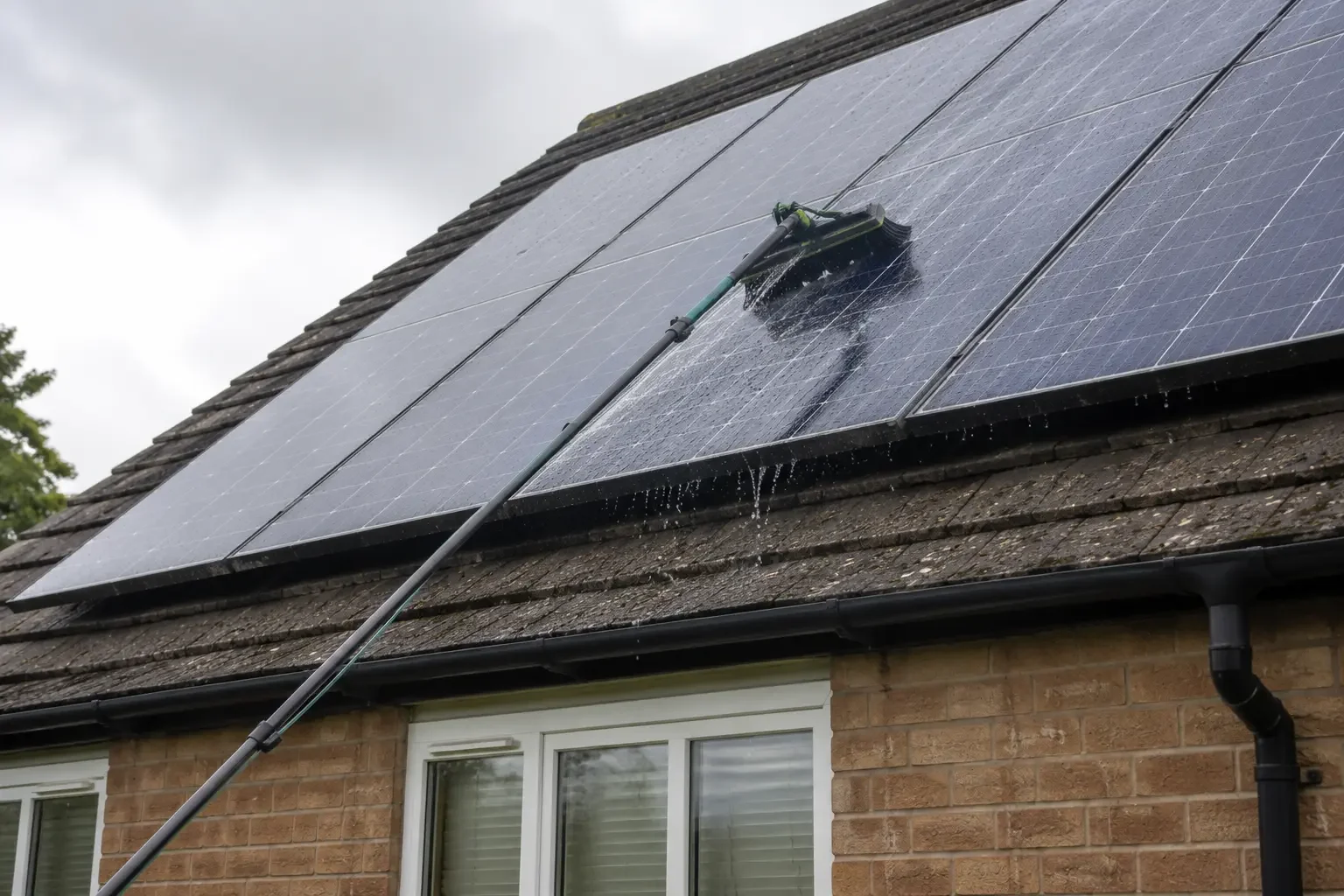
For the vast majority of homes, cleaning solar panels safely comes down to one piece of equipment: a telescopic water-fed pole used from the ground. There’s no need to go up on the roof, and doing so introduces a serious safety risk.
Here is the full process for how to clean solar panels in the UK:
Step 1: Check your system documentation and shut down your solar system
Follow the shutdown procedure in your system manual before starting. If you are unsure of the procedure, contact your installer before you begin.
Step 2: Choose the right time
Clean in the early morning or late afternoon when the panels are cool and out of direct sunlight. Never clean panels that are hot from a full day of sun. Cold water hitting a panel surface that has reached 70 to 80 degrees Celsius causes thermal shock, the stress created when a rapid temperature change induces microcracks in the solar cells. These cracks are not immediately visible but they reduce efficiency permanently.
Step 3: Set up your telescopic water-fed pole
A telescopic pole with a soft brush or sponge head is available from most DIY retailers. A 6-metre pole covers the majority of two-storey UK residential roofs from the ground.
Step 4: Rinse first
Use clean, cool water to rinse the panels and remove loose debris before applying any pressure. This prevents grinding grit across the panel surface.
Step 5: Clean with gentle circular motions
Using the soft brush or non-abrasive sponge head, work across the panel surface in gentle circular motions. Do not scrub. The goal is to lift the soiling, not to scour the glass.
Step 6: Rinse thoroughly
Rinse the full panel surface to remove all residue. Any soap or cleaning product left on the surface will dry and attract more dust.
Step 7: Address hard water in your area
West Yorkshire, Lancashire, and much of the North of England sit in a hard water zone. Tap water in these areas contains calcium and magnesium deposits that leave white limescale marks when the water evaporates. In hard water areas, finish with demineralised or distilled water for a clean, streak-free result.
Does the Cleaning Process Differ by Panel Type?
The core steps above apply to all solar panel installations. But the practical details vary depending on whether your system is roof-mounted, in-roof, or ground-mounted.
How to Clean On Roof / Rooftop Solar Panels
This is the most common configuration across UK homes. Panels sit raised on a frame or rail system with a small gap between the panel and the roof surface.
The cleaning process follows the step-by-step guide above. The main additional consideration is the gap underneath the panels. This gap can accumulate debris and leaf litter, and is the most common entry point for pigeons looking to nest beneath the panels. Check the frame edges and the gap underneath during your ground-level inspection, not just the panel surface.
For two-storey homes, a 6-metre telescopic pole is sufficient for most standard pitches.
👉 Learn more about rooftop solar panels
How to Clean In Roof Solar Panels
In-roof systems sit flush with the roof surface with no raised frame above the tiles. This design has a genuine maintenance advantage: there is no gap underneath for debris to collect and no recessed frame for pigeons to shelter in.
The cleaning method is exactly the same as for roof-mounted panels. The flush surface means water run-off can be slightly slower on shallower pitches (under 20 degrees), so it is worth a visual check more regularly if your roof is on the lower end of the pitch range. In most cases, in-roof systems are the easiest panel type to maintain.
👉 Learn more about in-roof solar panels
How to Clean Ground-Mounted Solar Panels
Ground-mounted systems are the simplest to clean. There is no roof height to contend with, no safety risk, and no need for a long telescopic pole. A standard hosepipe and soft brush will cover most ground-mounted installs.
The trade-off is that ground-mounted panels are more exposed to ground-level soiling. Rain hitting the soil or grass beneath the panels splashes mud and organic matter onto the lower edges of the glass. Leaf litter, grass cuttings, and agricultural dust settle more readily at ground level than on a rooftop. If your ground-mounted system is near trees or agricultural land, expect to clean more frequently than the residential pitched roof baseline.
What to Clean Solar Panels With (and What to Avoid)
Using the wrong product on a solar panel can damage the anti-reflective coating, leave a residue that attracts more dirt, or void your warranty. Here is a clear guide.
Use these:
Clean, cool tap water for most areas and most soiling types
Demineralised or distilled water in hard water areas (most of Yorkshire and Lancashire) to prevent limescale
Soft brush with non-abrasive bristles on a telescopic pole
Microfiber cloth for accessible panels or finishing after a rinse
Non-abrasive sponge for gentle surface cleaning
Mild, biodegradable soap if stubborn marks remain after rinsing, used sparingly and rinsed thoroughly
Telescopic water-fed pole for safe ground-level reach
Gloves to protect your hands from grime and sharp frame edges
Avoid these:
Pressure washers or power washers of any kind
Abrasive pads or scouring materials, which scratch the anti-reflective coating
Washing-up liquid, which leaves a surfactant film that attracts more dust and can damage coatings
Vinegar or acidic solutions, which degrade panel coatings with repeated use
Chemical solvents, bleach, or household cleaning sprays
Hot water, which causes thermal shock on warm panels
Standing on or walking across the panels under any circumstances
What Happens to Your Warranty If You Clean Incorrectly?
Most solar panel manufacturers specify that panels must be kept in reasonable working condition and subject to regular maintenance. A panel that has been visibly neglected, heavily fouled for years, or physically damaged during cleaning may not be covered under warranty for related faults.
The following actions will void most panel warranties outright:
Using a pressure washer, even on a low-pressure setting
Cleaning with abrasive materials that scratch the glass or anti-reflective coating
Using chemical solvents, bleach, or acidic cleaning products
Standing or walking on the panels
What your documentation tells you
Your system documentation, provided by your installer, should include the manufacturer's maintenance requirements. Check this before cleaning. If your install was carried out by an MCS-certified installer like P4, your aftercare documentation will include clear guidance on what is required to keep your warranty valid.
When we install your system, we walk you through the aftercare documentation at handover. If you are unsure what yours says or cannot locate it, get in touch and we will help you find it.
Keep a basic maintenance log
Note down the date of each clean, what was done, and any observations. This takes two minutes and protects you if you ever need to make a warranty claim.
Your P4 Solar Panel Maintenance Schedule
Do solar panels need servicing on a regular basis?
Yes, but the schedule is simpler than most people expect. Here is the routine we recommend for P4 customers.
| How Often | What to Do |
|---|---|
| Monthly | Check your monitoring app for output drops against expected generation. |
| Every 3 months | Visual inspection from the ground: bird droppings, streaking, debris at frame edges and green tinting. |
| Every 12 to 24 months | Full clean, DIY or professional depending on roof access and soiling level. |
| Every 1 to 2 years | Professional visual inspection of panels, frames, mounting, wiring and inverter. |
| Every 3 to 5 years | Full professional service: microcracks check, inverter health assessment and wiring condition review. |
| As needed | Immediate clean if heavy bird fouling, moss or significant debris is visible. |
A note on your inverter
Solar inverters typically need replacing every 10 to 15 years. Keep your system documentation safe and flag it with your installer as the replacement window approaches.
A note on battery storage
If your system includes a solar battery, your storage unit has its own maintenance considerations. Check our guide to Tesla Powerwall lifespan for a full breakdown.
The P4 monitoring app runs quietly in the background and alerts you when something changes. For P4 customers, it is available free on iOS and Android from the day your system is commissioned.
Free Download: P4 Solar Panel Maintenance Schedule
Prefer a printable version? Download our free maintenance schedule to keep track of routine checks, cleaning intervals and recommended servicing throughout the lifetime of your solar panel system.
FAQs: Solar Panel Cleaning
-
Solar panels do not fully clean themselves, although most modern panels have a hydrophobic coating that helps rain wash away light dust on well-pitched roofs. This works well for loose particles but does not remove bird droppings, bonded pollen, moss, or industrial film. For most UK homes, a full clean once every one to two years is still needed.
-
For most UK homes on a pitched roof, cleaning every 12 to 24 months is sufficient. This increases to every 6 to 12 months if your panels are near trees, agricultural land, or in an urban area with high pollution. Ground-mounted systems and low-pitch roofs typically need more frequent cleaning than steeply pitched roof installs.
-
The best approach is clean, cool water with a soft brush or microfiber cloth on a telescopic pole. In hard water areas, which includes most of Yorkshire and Lancashire, finish with demineralised or distilled water to prevent limescale marks. Avoid washing-up liquid, vinegar, and any abrasive materials.
-
No. You should not use a pressure washer on solar panels under any circumstances. High-pressure water can force moisture past panel seals, damage frame connections, crack cells, and void your panel warranty. A standard hose or water-fed telescopic pole provides all the water pressure you need.
-
Yes. Dirty panels reduce the total amount of electricity your system generates. Less generation means less surplus to export to the grid, which directly reduces your SEG earnings. If your export readings have dropped alongside your generation figures, soiling is one of the first things to check.
-
Whether you should clean your solar panels yourself or hire a professional depends on your roof type, access, and the type of soiling involved. For ground-mounted systems, bungalows, and single-storey roofs with easy access, DIY cleaning with a telescopic water-fed pole is safe and effective for most homeowners. For two-storey pitched roofs, steep or restricted access, or heavy bird fouling, moss, or lichen, a professional clean is the safer and more effective choice.
-
Yes. Always switch off your solar system following the shutdown procedure in your system manual before you begin cleaning. If you are unsure of the correct procedure for your system, contact your installer before starting.
-
Not exactly. UK winters bring more frequent rainfall that can rinse away loose surface dust, but winter also introduces more organic debris, road grime splashback, and moisture that traps dirt. The best time to clean is late winter or early spring, before the peak generation season begins in April, so your panels go into the highest-output months in the best possible condition.
Final Thoughts: Do Solar Panels Need Cleaning?
Solar panels are about as close to a set-and-forget home investment as you will find. But they do require occasional maintenance, and the right routine makes all the difference to long-term performance.
A telescopic pole, cool water, and one clean per year in late winter is enough for most homes. If your system is near trees, in an urban area, or has a recurring bird problem, a professional clean once or twice a year more than pays for itself in recovered output.
P4 customers have the monitoring app, the aftercare team, and the install documentation from day one – so you don’t have to work any of this out alone.
Ready to talk to someone about your system's performance?
Explore More with P4 Solar

Helping Homes & Businesses Across Yorkshire & The North
P4 Solar designs and installs solar panels, battery storage and renewable energy solutions across Yorkshire, Lancashire, Greater Manchester and surrounding areas.
View All Areas We Cover →