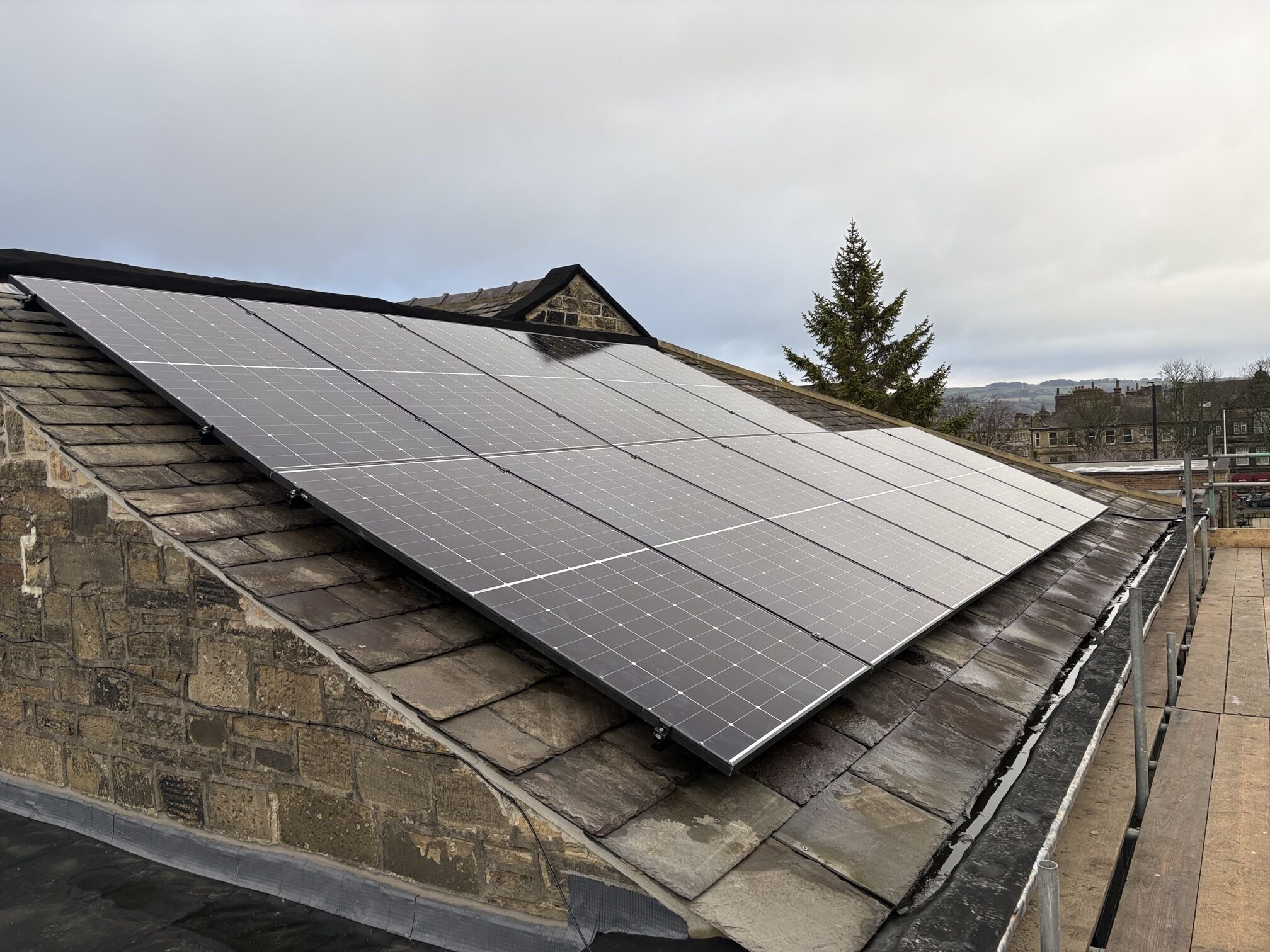
Thinking about solar but not sure which of the different types of solar panels to go for? You're not alone. Between mono, poly, thin-film, N-type and all-black, quotes can get confusing fast.
The good news? For most UK homes, the choice is a lot simpler than it looks.
Types of solar panels at a glance:
There are three main types of solar panels: monocrystalline, polycrystalline and thin-film.
Monocrystalline is the go-to for UK homes. It's the most efficient type and lasts the longest.
Polycrystalline has been phased out, and thin-film rarely suits a house roof.
The choices that really matter are the cell inside the panel (like N-type or back contact), the finish (all-black or silver frame) and how it's fitted.
In-roof and on-roof aren't panel types. They're ways of mounting panels.
At P4 Solar, we install solar panels for homes and businesses across Yorkshire and the North. Below, we'll walk you through each type, explain the terms you'll see on a quote, and show you how we pick the right panel for each home.
Quick Navigation
What Are the Different Types of Solar Panels?
There are three main types of solar panels: monocrystalline, polycrystalline and thin-film. They all turn daylight into electricity, but monocrystalline does it best, which is why it's on almost every new UK home install.
They're all solar PV (photovoltaic) panels. The difference is what they're made of, and that changes how much power you get, how much roof space you need and how long they'll last.
Types of solar panels compared (UK, 2026)
| Monocrystalline | Polycrystalline | Thin-film | |
|---|---|---|---|
| Efficiency | 21–25% | 15–18% | 10–19% |
| Roof space needed per kW | About 4–5 m² | About 6 m² | About 6–10 m² |
| Lifespan | 30–40 years | 25–30 years | 10–20 years |
| Typical warranty | 25–30 years | Around 25 years | 10–25 years |
| Cost | Best value per kW | Cheaper, but hard to find now | Cheap per panel, but you need more of them |
| Fitted on UK homes today? | Yes, it's the standard | Rarely | Rarely |
Monocrystalline efficiency is based on ITRPV industry data and TaiyangNews module rankings. Roof space per kW is our own estimate based on typical panel efficiency.
What are monocrystalline solar panels?
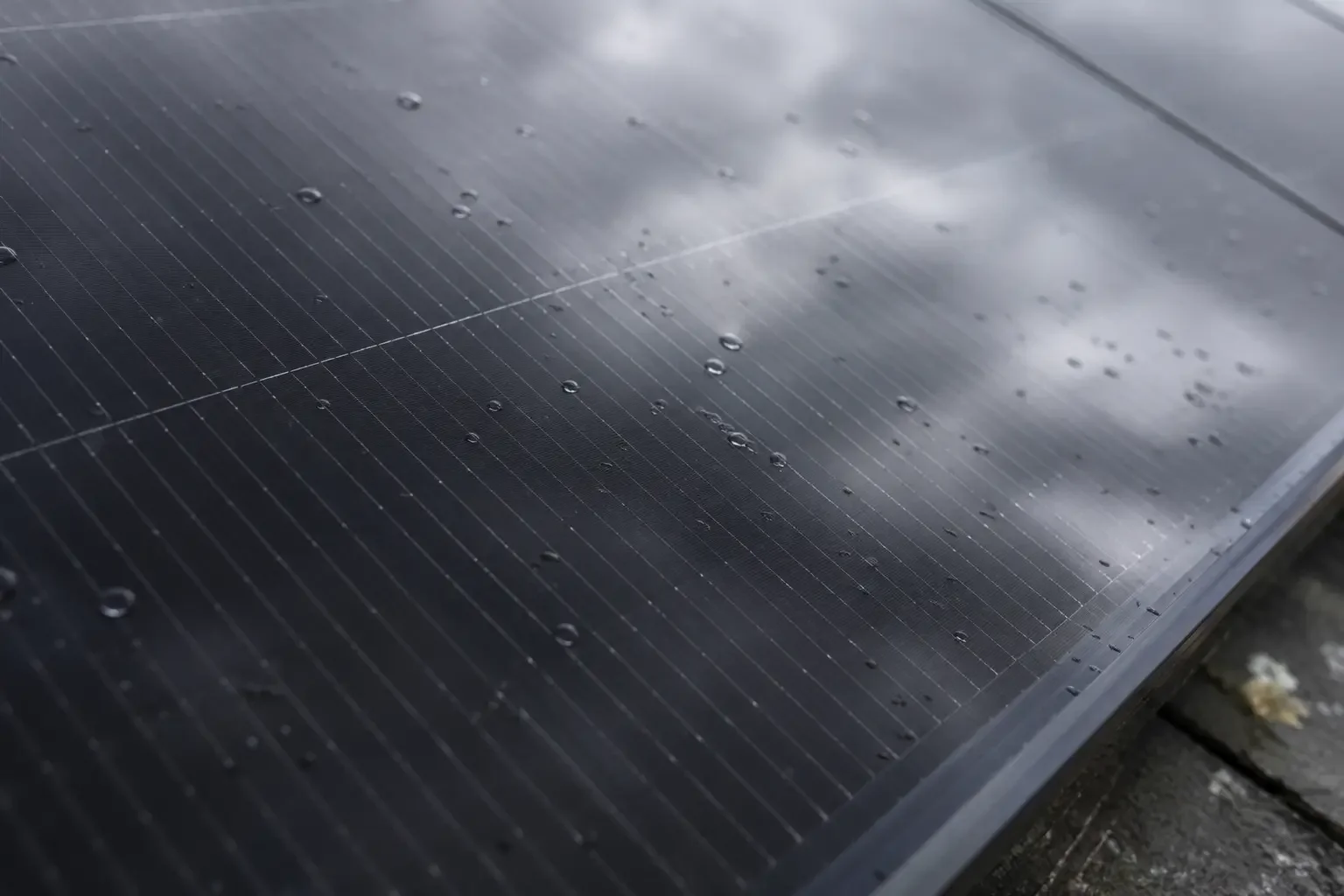
Monocrystalline solar panels are made from a single, pure crystal of silicon. You'll recognise them by their smooth, dark finish.
Because the silicon is so pure, electricity moves through it easily, so you get more power from every panel. Most modern ones turn 21–25% of the light that hits them into electricity.
Why does that matter for UK homes?
Our roofs are often small. More power per panel means you need fewer of them.
Our weather is often grey. Mono panels still perform well in cloudy, low-light conditions. (And yes, solar panels do work on cloudy days.)
It's not just a UK thing, either. According to the ITRPV industry roadmap, monocrystalline now makes up almost the entire silicon solar market worldwide.
What are polycrystalline solar panels?
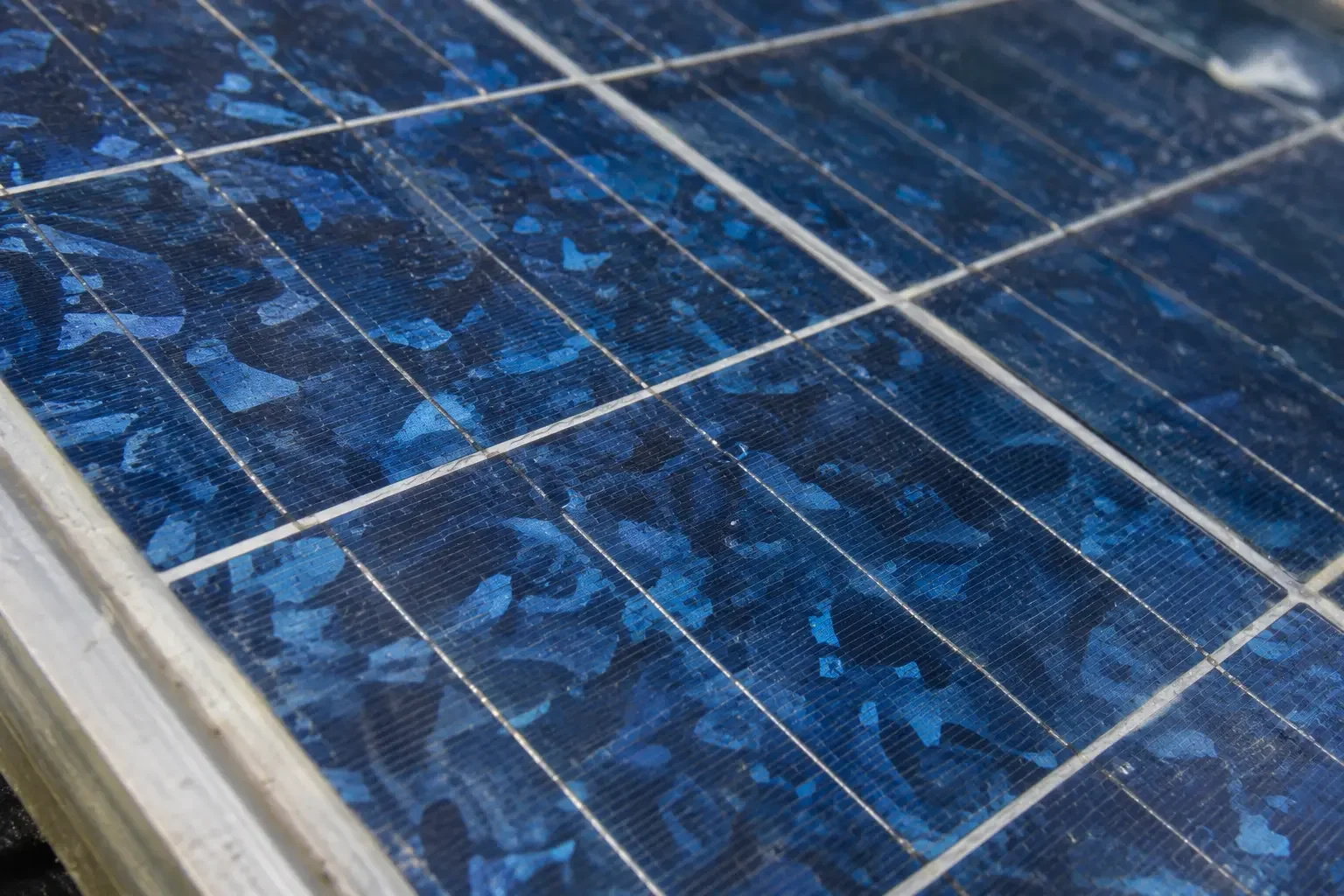
Polycrystalline solar panels are made from lots of silicon fragments melted together, which gives them a speckled, blue look.
They used to be the cheaper option. But as mono got more affordable, the price gap closed, and there wasn't much reason left to choose poly. Most big manufacturers have now stopped making them for homes.
✅ P4 Solar's tip: If you're quoted for polycrystalline panels in 2026, ask why. It could be old stock, and modern mono panels will get a lot more out of your roof.
What are thin-film solar panels?
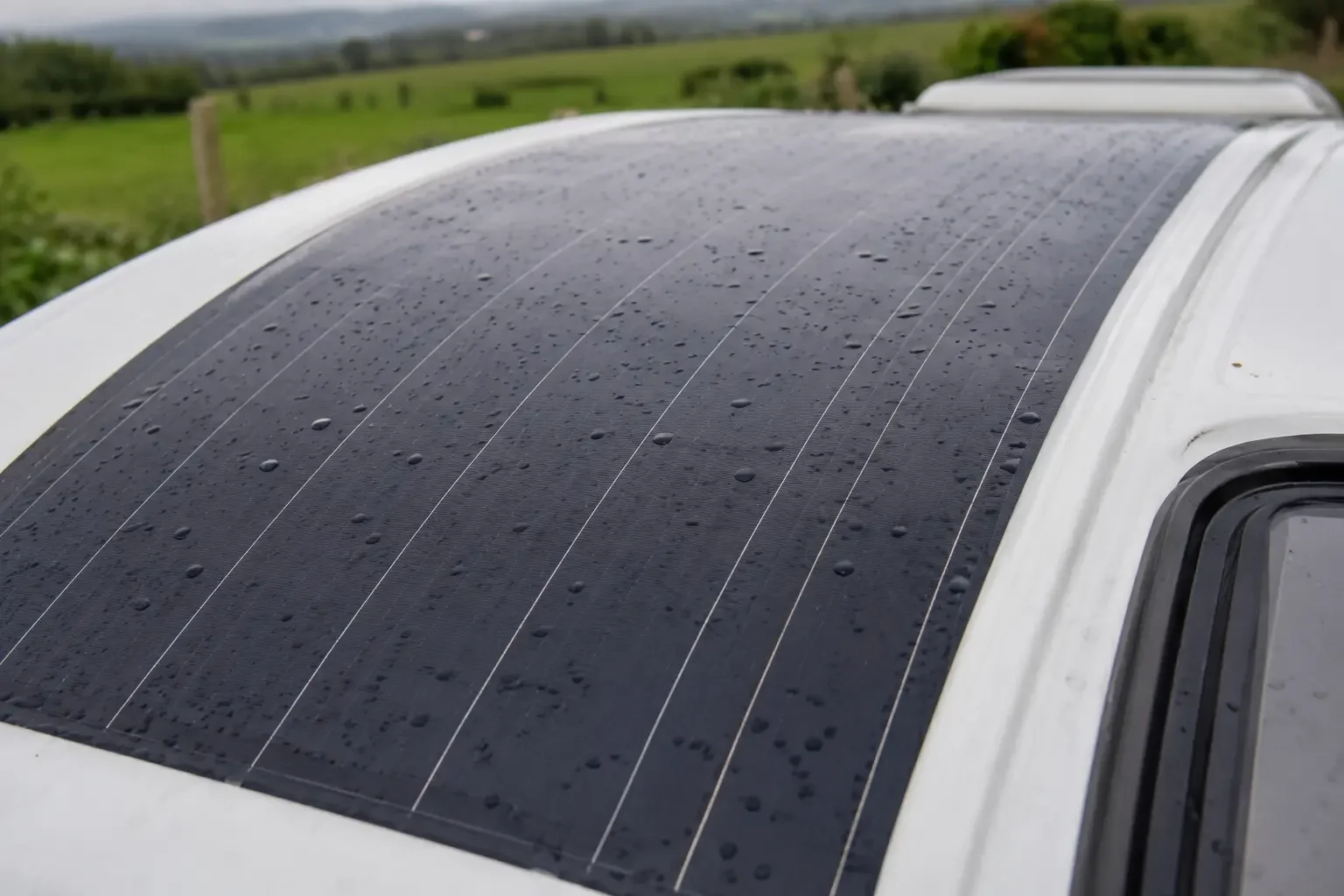
Thin-film solar panels are made by coating a very thin layer of light-absorbing material onto glass, plastic or metal. They're light, and some can even bend.
That's handy on a caravan, a boat or a curved commercial roof. On a house, not so much. You'd need a lot more roof space for the same power, and they don't tend to last as long. That's why we rarely recommend them for homes.
Other Types of Solar Panels You Might Hear About
You might also come across solar tiles, solar thermal, hybrid panels, transparent panels and perovskite. They're either niche, pricey or not quite ready for UK homes yet.
| Type | What it is | Can you get it for a UK home? | Our take |
|---|---|---|---|
| Solar tiles | Solar cells built into roof tiles or slates | Yes, but it's niche | They blend in nicely, but cost more and produce less. An in-roof system gives a similar look with more power. |
| Solar thermal | Panels that heat water instead of making electricity | Yes | A different thing altogether. It won't lower your electricity bills or charge a battery. |
| Hybrid (PVT) | Panels that make electricity and capture heat | Yes, but rarely | Clever, but pricey and complicated. Very few homes need them. |
| Transparent | See-through panels used in windows and glazing | Not for homes yet | They produce very little power, so they're mostly used in research and commercial buildings. |
| Perovskite | A new material, usually layered on top of silicon (called "tandem" cells) | Not yet | One to watch. Industry forecasts expect tandem panels in volume from around 2028. |
Panel Type vs Mounting Type: Why In-Roof Isn't a Panel Type
In-roof, on-roof and ground-mounted aren't types of solar panels. They're ways of fitting them. The panel itself is usually the same monocrystalline panel. What changes is how it's fixed.
It's an easy one to mix up, especially as in-roof systems can look a lot like solar tiles.
| Mounting option | How it's fitted | Best for |
|---|---|---|
| On-roof | Panels sit on a frame above your existing tiles or slates | Most homes. It's the most common and cost-effective option. |
| In-roof | Panels replace a section of tiles and sit flush with your roof | New builds, re-roofs and anyone after a sleek, seamless look |
| Ground-mounted | Panels sit on a frame in your garden or on your land | Homes with space but an unsuitable roof, farms and bigger systems |
For example, on a new build in Ilkley, we fitted 24 Viridian 335W in-roof panels. That's an 8.04 kWp system that sits flush with the roof.
👉 Take a look at the case study
So when you're comparing quotes, it helps to think of it as two separate choices: which panel, and how it's fitted.
Not All Monocrystalline Panels Are the Same
Once you've settled on mono, there's one more choice: the cell inside the panel. The best panels today use N-type cells with TOPCon, heterojunction or back contact technology. They're more efficient and last longer than older PERC panels.
What's the difference between N-type and P-type solar panels?
It comes down to how the silicon is treated. N-type panels lose less power in their first few years, cope better with heat and low light, and often come with longer warranties. P-type was the standard for years, but it's being replaced fast. N-type made up around 82% of the market in 2025, according to the ITRPV.
The right option depends on your home, your battery and what you’d want to keep running. Get in touch and we’ll give you a bespoke quote based on your requirements.
What do PERC, TOPCon, heterojunction and back contact mean?
They're the different kinds of cell you'll see on spec sheets and quotes:
| On your quote | What it means | Typical efficiency | Our view |
|---|---|---|---|
| PERC | The older P-type cell, with an extra layer that bounces light back through | Around 21–22% | Still works, but it's on its way out. Newer options are better value now. |
| TOPCon | Today's most common N-type cell, built to lose less energy | Around 23–24% | A safe, proven choice. It made up around three-quarters of cell production in 2025. |
| Heterojunction (HJT) | Layers different types of silicon together | Around 23–24% | Great in heat and low light, but less common in the UK. |
| Back contact (BC, ABC, IBC) | Moves all the wiring to the back of the cell, so nothing blocks the light on the front | Around 24–25% | The most efficient panels you can buy, with a clean, uniform look. |
Efficiency figures and market share from the ITRPV 2026 roadmap, TaiyangNews ITRPV summary and TaiyangNews module rankings. Individual models vary.
What are half-cut cells and dual-glass panels?
Two more you might spot:
Half-cut cells. Each cell is cut in two. That cuts energy losses and means a bit of shade on one part of the panel doesn't drag the rest down as much. Most modern panels have them.
Dual glass. Glass on the front and back, instead of a plastic backing. It makes the panel tougher, and these often come with longer warranties. They're just a little heavier.
✅ P4 Solar's tip: Don't choose on efficiency alone. If you've got plenty of roof space, a slightly less efficient panel can be the better buy. If your roof is small or partly shaded, that's when a high-efficiency panel really earns its keep.
Are Bifacial Solar Panels Worth It?
On a typical pitched UK roof, bifacial solar panels aren’t worth paying extra for. They can catch light on both sides, but on a roof the back of the panel faces your tiles, so hardly any light gets to it. That means they produce about the same as a standard mono panel.
Bifacial panels have a see-through back, usually glass, so they can pick up light that bounces off the surface underneath. The more light that reflects back, and the more space there is behind the panel, the more extra power you get.
| Where the panels go | Is bifacial worth it? |
|---|---|
| Pitched roof (on-roof or in-roof) | Rarely. The back of the panel gets almost no light. |
| Flat roof with a light-coloured surface | Sometimes, if the panels are raised up and tilted. |
| Ground-mounted, especially over pale gravel or grass | Often. There's room for light to bounce up onto the back. |
Bifacial panels can also be a good choice for coastal homes. Their glass-on-both-sides design stands up well to salty sea air.
At P4 Solar, we don’t usually recommend bifacial panels, but we can fit them on ground-mounted, commercial and flat roof systems on request.
One thing to bear in mind: according to the ITRPV, the extra cost of bifacial panels has largely disappeared, and lots of modern panels are bifacial anyway. So you might end up with them as standard. Just don't pay more for them on a pitched roof.
All-Black vs Silver Frame: Which Suits Your Home?
All-black solar panels have black cells, a black backing and a black frame, so they look like one smooth, dark surface. Silver-frame panels have a metal border and you can see the gaps between the cells. Both produce a similar amount of electricity, so it mostly comes down to looks and budget.
| All-black panels | Silver-frame panels | |
|---|---|---|
| Look | Sleek and uniform, blends into darker roofs | Visible frame and cell lines |
| Power output | Very similar on modern panels | Very similar |
| Best for | Slate or dark tiles, period and stone homes, conservation areas | Red or light tiles, garages and outbuildings, ground mounts, tighter budgets |
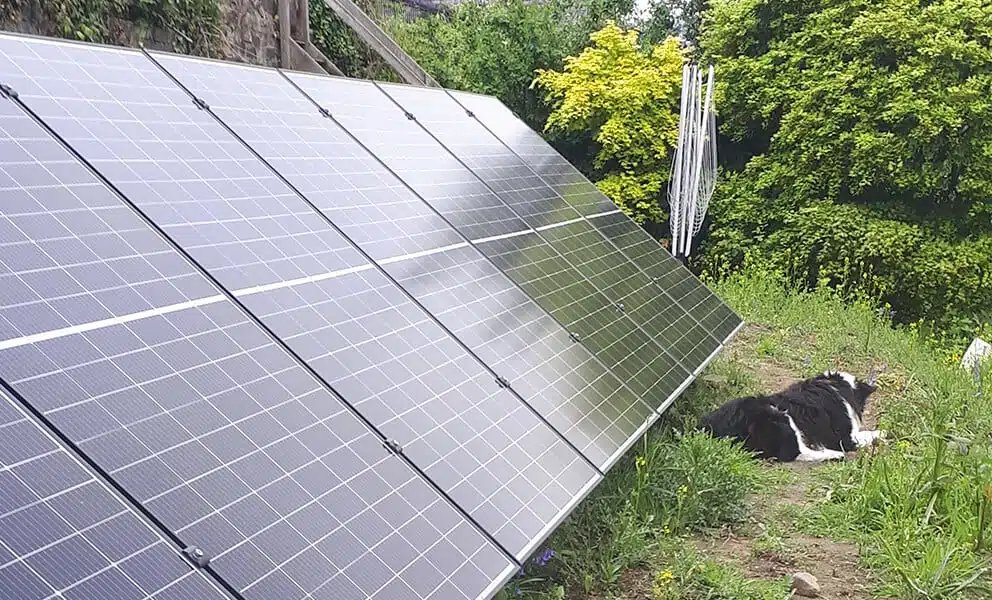
Silver-frame solar panels on a ground-mounted system in Sowerby Bridge, installed by P4 Solar. Read the case study
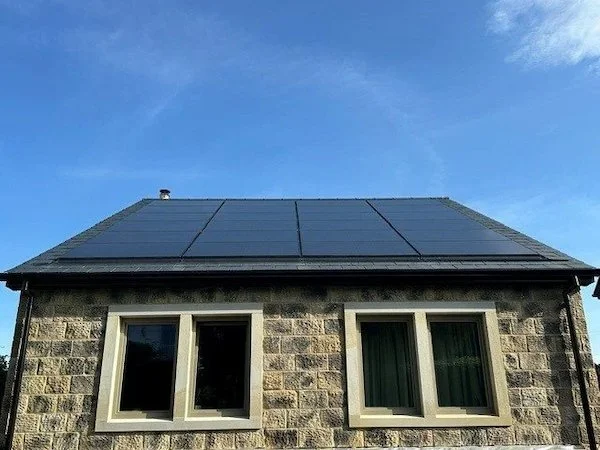
All-black in-roof solar panels on a stone-built new build in Ilkley, installed by P4 Solar. Read the case study.
Do all-black solar panels produce less electricity?
Not enough that you'd notice. Older all-black panels lost a little power because the black backing soaks up more heat. In the UK's mild climate that makes very little difference, and today's best all-black panels, including back contact ones, are among the most efficient you can buy.
Which solar panels are best for period or stone homes?
All-black panels are usually the best fit. They sit much more quietly on slate and stone roofs. Councils' guidance on solar in conservation areas often favours matte black, non-reflective panels, like Wirral Council's, and sometimes all-black in-roof systems, like St Albans'. Historic England also has guidance for historic buildings.
If you're in a conservation area or own a listed building, you may need planning permission, so it's worth checking early.
Worried solar panels will spoil the look of your home? We tackle that in Myth Busters: Solar Panels are Ugly!
Which Type of Solar Panel Is Best for Your Home?
For almost every UK home, the best type of solar panel is monocrystalline. Which one we'd recommend depends on your roof and what matters most to you.
| If your home has… | We'd usually suggest… |
|---|---|
| A small or partly shaded roof | High-efficiency mono with back contact cells, to get the most power from the space you have |
| Plenty of unshaded roof space | Great-value N-type TOPCon mono panels |
| A period, stone or conservation area setting | All-black panels, possibly fitted in-roof |
| A new build or roof replacement | An in-roof system for a flush, seamless finish |
| A tight budget | Standard mono panels from an established brand with a strong warranty |
| Land, but an unsuitable roof | Ground-mounted panels, where bifacial can be worth it |
Every roof is different, so we'll always check yours before recommending anything.
What About Solar Panels for Businesses?
Most businesses use monocrystalline panels too, but commercial roofs and sites can open up a few more options. The right setup depends on your roof, your land and when your business uses the most energy.
| Your site | What often works well |
|---|---|
| Large flat roof (warehouses, offices, schools) | Mono panels on tilted or east-west frames, to get the most from the space |
| Farm barns and sheds | Roof-mounted panels on sheeted metal or fibre cement roofs, with fixings chosen to suit the roof |
| Farmland or open ground | Ground-mounted systems, where bifacial panels can add extra power |
| Pubs, restaurants, cafés and hotels | Panels sized around daytime kitchen and refrigeration loads, often with a battery to store the surplus for evening service |
For example, at the Travellers Rest pub in Meltham, we fitted 33 Aiko 455W panels on a slate roof, with a 10.8 kWh battery. The system is estimated to save around £3,120 in its first year, with a payback of around five years.
👉 Read the Travellers Rest case study
Commercial systems are usually bigger, so we look closely at roof strength, when you use energy during the working day, and how quickly the system will pay for itself.
⚡ Running a business, farm or community building? Take a look at our commercial solar, agricultural solar, hospitality solar and community solar installations, or get in touch to talk through your site.
The Panels P4 Solar Install (and Why)
At P4 Solar, we mainly install monocrystalline panels from Aiko, Longi and Viridian. Which one we suggest depends on your roof, how much the look matters to you, and your budget.
Every system we design is made for you. We look at how much energy you use now and might need in future, alongside your budget, roof space and anything else about your home that affects the install.
| Panel brand | Best for | Why we like it |
|---|---|---|
| Aiko | Homes where looks matter, and smaller or partly shaded roofs | Sleek all-black panels with no lines on the front. Aiko's back contact (ABC) cells reach around 24–25% efficiency on the latest models and can handle some shading better. A premium option. |
| Longi | Great value, especially if you've got plenty of roof space | We've been partnered with Longi since 2023 and have fitted hundreds of systems with their panels. Newer models reach around 23–24% efficiency, with warranties of up to 30 years. |
| Viridian | New builds, re-roofs and in-roof installs | Viridian's Clearline Fusion system is built into your roof rather than sitting on top, for a flush finish. It can also mean fewer roof tiles are needed. |
How we choose the right panel for you
Roof space and shading. Smaller or shaded roofs get the most from high-efficiency panels.
Looks. All-black for period homes, dark roofs and conservation areas. A standard finish where looks matter less.
Warranty. How long the panel is covered, and how much power it's guaranteed to keep over time.
Budget. We'll show you where spending more makes a real difference, and where it doesn't.
Track record. Established brands with a proven UK presence, so your warranty still means something years down the line.
Future plans. Whether you might add a battery, EV charger or more panels later.
Whichever panels you go for, we fit them using Esdec mounting systems, which come with a 20-year product warranty.
⚡ Not sure which panels suit your roof? Book a free consultation with the P4 team and we'll talk you through your options.
FAQs: Types of Solar Panels
-
Monocrystalline panels with back contact cells are the most efficient you can buy for your home right now. The best reach around 24–25% efficiency, according to TaiyangNews' 2025 module rankings. Standard TOPCon panels aren't far behind at around 23–24%.
-
A high-efficiency monocrystalline panel, ideally with back contact cells. You'll need fewer panels to hit your target, and back contact panels tend to cope better with partial shade. This is where we'd usually suggest Aiko.
-
Yes. Higher-efficiency panels produce more power each, so you need fewer of them for the same system size. P4 Solar’s guide on how many solar panels you need shows you how to work it out.
-
It's best not to on the same string. Panels wired together should match, otherwise the weakest one can drag down the rest. If you're adding panels to an existing system, they can often go on a separate string or inverter instead. Your installer will check what works for your setup.
-
Not if they're still working well. Poly panels can last 25 years or more, and swapping out working panels rarely pays off. If you want more from your system, adding a battery or some extra modern panels is usually a better investment.
Not sure what's right for your roof? Book a free consultation and the P4 team will recommend the best panels for your home.
Final Thoughts: Which Type of Solar Panel Is Best for You?
Of all the types of solar panels available in the UK, monocrystalline is the clear winner for homes. From there, it's about finding the right one for your roof. A high-efficiency, all-black panel might be perfect for a small slate roof on a stone cottage. A great-value panel could be the smarter buy for a big, sunny roof on a modern home.
The easiest way to know for sure? Let us take a look. We'll check your roof, shading and energy use, and recommend the panels that fit.
Find the Right Solar Panels with P4 Solar
We'll talk you through your options in plain English and give you a fixed quote, with no surprises.
⚡ Book your free consultation today · Explore residential solar panels · See our case studies
Learn More About Solar
How Long Do Solar Panels Last?: what to expect from your panels over 25 years and beyond.
What Is a Solar Inverter? Types, Costs & Benefits Explained: the other key part of your system, explained.
Is My Home Suitable for Solar Panels?: how to tell if your roof is right for solar.
Myth Busters: I Need a South-Facing Roof for Solar: why east and west-facing roofs can work too.